By Four Sides Group Published
Choosing the wrong custom software provider is expensive. A failed project means lost months, an investment you never recover, code no one can maintain and, in the worst case, starting over from scratch with another vendor. Mexico has hundreds of software development companies, but quality varies enormously among them.
The current landscape of the Mexican market
Several types of providers coexist in Mexico, each with its own strengths and limitations:
- Freelancers and small teams. The cheapest option, and often technically capable. The risk is continuity.
- Established software factories. Documented processes, complete teams and the ability to scale. The right choice for mid-size and large projects.
- Large multinational consulting firms. Financial muscle and robust processes, but more expensive and less agile.
- Digital agencies. Specialized in websites; their technical focus may not measure up to enterprise development.
- Offshore outsourcing. Attractive costs, but cultural distance, time zones and language barriers create problems.
The 14 essential selection criteria
1. Verifiable experience and track record
Ask for examples of projects similar to yours in size and type. Check references directly with former clients. A provider that doesn't want you talking to its clients is a huge red flag.
2. Quality certifications
ISO 9001:2015 is the minimum standard for industrialized processes. Few Mexican providers actually hold it; many say "we use ISO" without being certified. Verify the certificate and the body that issued it.
3. Documented processes
A serious provider should be able to show procedures for requirements gathering, change management, quality control, implementation and support. "We're agile" is not a methodology without documentation behind it.
4. Team structure
An enterprise project requires a project lead, functional analyst, UX/UI designer, frontend and backend developers, tester/QA, implementation/DevOps engineer and post-production support. If a provider only has "developers," you'll be missing critical roles.
5. Experience in your industry
Building for logistics is different from healthcare, foreign trade or manufacturing. Every industry has its own regulations and patterns. A provider with prior experience will understand your needs from day one.
6. Code ownership
The code must belong to you when the project ends. That includes complete technical documentation, repositories, access credentials and everything another provider would need to continue the work. If the contract isn't explicit, it's probably not yours.
7. Commercial transparency
Pricing should be broken down by phase and deliverable, not presented as a single opaque number. Scope changes should follow a clear process with a known rate schedule.
8. Post-delivery support
Software needs maintenance. A serious provider offers support agreements with clear SLAs: response times, resolution times and support channels. If they disappear after delivery, they're not a long-term partner.
9. Modern, maintainable technology
They should use current, well-documented technologies, not obsolete stacks. They should be able to explain why they chose each technology and what it means for your project.
10. Integration capability
Your software will need to integrate with your ERP, legacy systems, third-party services and corporate authentication. The provider must demonstrate real experience doing this.
11. Change management
There should be a clear process to document every change, analyze its impact on timelines and costs, and manage approval. Without it, changes lead to conflicts and projects that never end.
12. Systematic quality control
Ask about separate environments (development, testing, production), unit, integration and user acceptance testing, documented test cases, and validation of deliverables before release.
13. A contract with clear clauses
It should cover code ownership, confidentiality, post-delivery warranty, termination, intellectual property, liability for damages and payment terms. If it's generic or only protects the provider, something is wrong.
14. Financial capacity
A project can take months. The provider needs the financial structure to sustain it without disappearing halfway through.
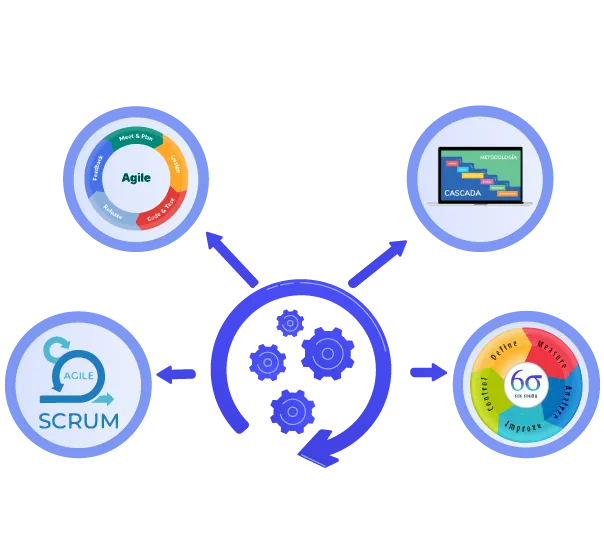
Documented processes, not promises
A serious provider can show you its documented procedures: how it manages requirements, controls changes, assures quality, delivers and provides support. "We're agile" is not a methodology without documentation to back it up and external audits to verify it.
Red flags: signs a provider is NOT trustworthy
- Quotes with no breakdown or phases
- Promises like "we deliver in half the time of everyone else"
- Inability to show certifications or process documentation
- Reluctance to let you contact former clients
- A generic contract with no specific ownership clauses
- A "phantom" team (they show you résumés, but those people never work on your project)
- Missing roles (only programmers, no analysts or QA)
- Quotes far below market rates
- Pressure to sign without reviewing or negotiating
- Unwillingness to deliver the code in repositories you control
- No clear answers about what happens in conflict scenarios
How to validate references
When you talk to former clients, ask:
- Did they meet the agreed timelines? If not, how did they handle the delays?
- Were there unexpected additional costs?
- How was communication during the project?
- How available are they for post-delivery support?
- Would you recommend this provider? Why or why not?
- What would you do differently if you had to choose again?
Look for specific answers, not generalities. If the client only says "everything was fine," they probably didn't dig very deep.
What to ask in the first meeting
- What certifications do you hold, and how can I verify them?
- What is your methodology? Can I see the documented procedures?
- How do you manage changes during the project?
- Which team will you assign to my project? Can I meet them?
- Who owns the code at the end? What documentation will I receive?
- What does the warranty cover, and for how long?
- Do you offer post-delivery maintenance? With what SLAs?
- Can you show me projects similar to mine?
- Can I speak with two or three former clients?
- How are payments structured? What happens if I need to pause the project?
- What technologies do you use, and why?
- How do you handle confidentiality and security?
How to compare proposals
Once you have 2-3 proposals, compare them in a matrix along these dimensions:
- Total cost and breakdown by phase
- Estimated delivery time
- Scope and specific deliverables
- Assigned team and experience
- Proposed methodology
- Maintenance terms
- Warranties and responsibilities
- Flexibility to accommodate changes
- Verifiable reputation
Be careful about choosing on price alone. The cheapest proposal often ends up being the most expensive because it leads to delays, rework or an abandoned project.
Conclusion
Choosing a custom software provider is not a decision to make quickly or based on price alone. It's a strategic decision that will affect your operations for years to come. Take the time to evaluate processes, certifications, references and the team. The time you invest in choosing well pays for itself many times over during the project.
Evaluating providers for your next project?
We work with ISO 9001:2015 certified processes, complete multidisciplinary teams and 20+ years of experience
Meet Four Sides Group Schedule a Consultation