By Four Sides Group Published
A decade ago, connecting industrial machines to software systems was a complex, expensive, long-term project. Today, industrial IoT sensors are affordable, easy to connect and allow phased implementations. For Mexican factories, this is a modernization opportunity that used to be reserved for large multinationals.
What are industrial IoT sensors?
Industrial IoT = network-connected devices with sensors that generate data about equipment, processes or environments. Common sensors in manufacturing:
- Temperature and humidity: ovens, cold rooms, ambient conditions
- Vibration: motors, compressors, pumps
- Pressure: hydraulic, pneumatic and gas systems
- Flow: liquids, gases, air
- Power consumption: machines, zones, the entire plant
- Proximity and position: product throughput, asset location
- Imaging and vision: automated visual inspection
Why integrate IoT with your systems
The value isn't in installing sensors. It's in integrating the information with the systems that run the operation: ERP, MES, custom software. Benefits:
- Real-time monitoring. Instant status of machines, processes and products.
- Predictive maintenance. Sensors detect degradation before failure.
- In-process quality control. Catch out-of-spec products before they become finished goods.
- Automatic traceability. Events captured without human intervention.
- Consumption optimization. Energy, water, compressed air; identify waste.
- Greater safety. Leak detection, abnormal temperatures, automatic alarms.
Typical architecture
Layer 1: Sensors and actuators
Physical devices on the plant floor. Sensors measure; actuators perform actions (open valves, stop motors).
Layer 2: Gateways or concentrators
They collect data from multiple sensors, apply pre-processing and send it to the next layer. They reduce network load and allow local operation without external connectivity.
Layer 3: IoT platform
Software that receives, stores and manages device data. On your own server, on a public cloud (AWS, Azure, Google) or through manufacturer solutions.
Layer 4: Integration with enterprise systems
Relevant data is sent to the ERP, MES or custom software. This is where value is created: data turned into operational decisions and auditable records.
Layer 5: Analytics and visualization
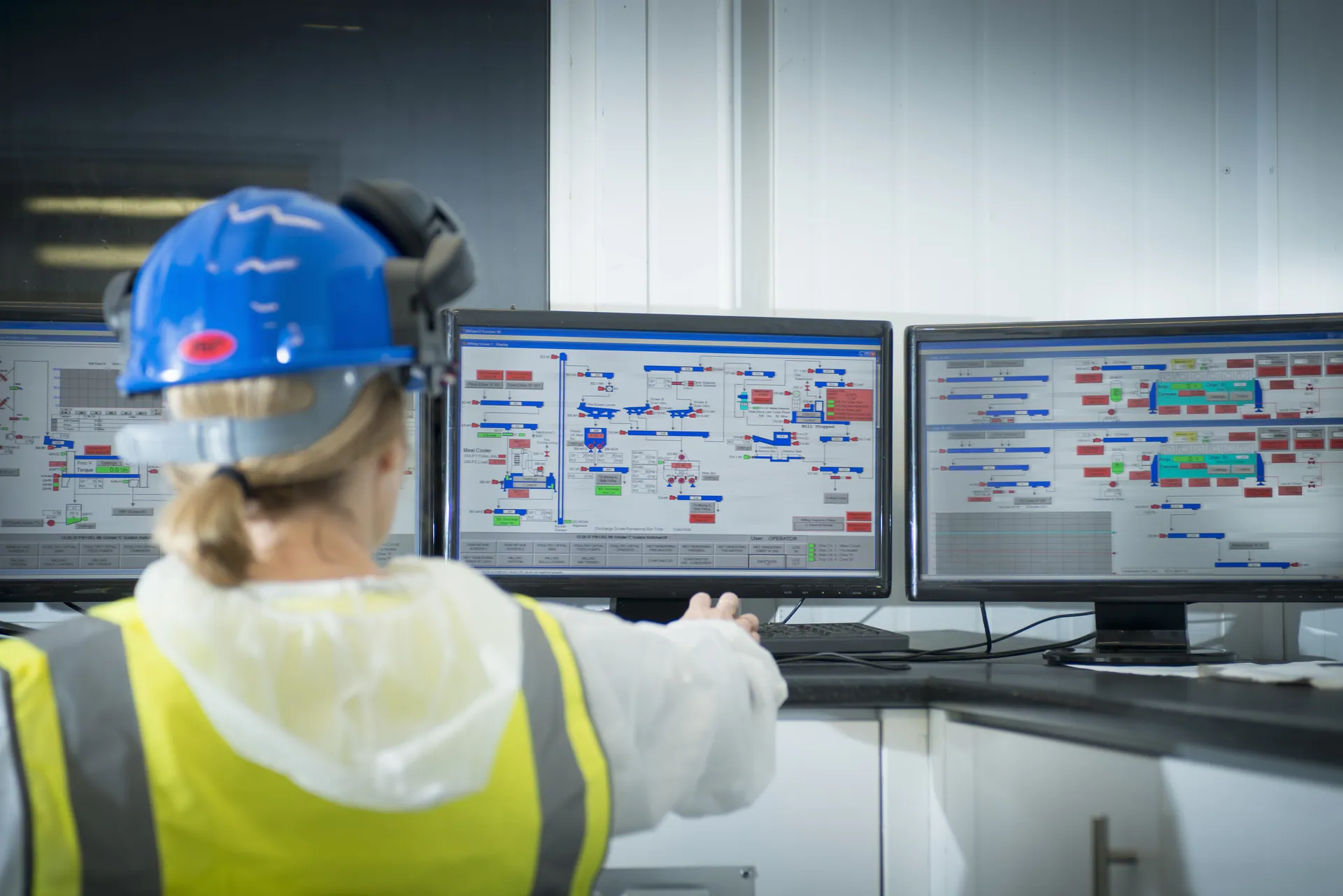
Dashboards, reports, alerts. The right information to the right operator at the right moment, in an actionable format.
Common protocols
- MQTT: lightweight, ideal for resource-constrained devices
- OPC-UA: the industrial standard for automation equipment
- Modbus: legacy but widely used in industry
- REST/HTTP: for integrations with modern systems
- CoAP: similar to HTTP, optimized for IoT
Use cases by industry
General manufacturing
- Real-time OEE monitoring
- Cycle times by machine and operator
- Alerts for unplanned stoppages
- Energy consumption by line
Food and beverage
- Temperature in cold rooms and cooking
- Humidity in warehouses
- Steam pressure in sterilization
- Traceability with automatic timestamps
Pharmaceutical
- Warehouse environmental conditions
- Serialization traceability
- Monitoring of critical equipment
- Auditable event logs
Automotive
- Process parameters at every station
- Unit-level identification with RFID or vision
- Integration with statistical quality control
- Robot monitoring
Chemical industry
- Process safety (leaks, temperatures)
- Mixing and reaction control
- Raw material consumption
- Environmental safety conditions
How to get started: a phased approach
- High-value use case. 1-3 machines or processes where real-time information delivers clear value.
- Pilot. Install the sensors, connect them and integrate them with a basic dashboard. Validate reliability.
- Expansion. Once the pilot succeeds, extend to more equipment. Each expansion carries less risk.
- Deep integration. Connect to the ERP and MES, automatic alerts and systematic operational decisions.
- Advanced analytics. Predictive models, predictive maintenance, automated optimization.
Cybersecurity considerations
Connecting industrial equipment to networks exposes it to new risks. A responsible project includes:
- An industrial network separated from the corporate network
- Device authentication
- Encrypted communications
- Regular firmware updates
- Network anomaly monitoring
- Incident response plans
Frequently asked questions
What if my machines are very old?
There are solutions for almost any equipment. External sensors can instrument machines that have no built-in connectivity. Operation is monitored through its physical effects.
How much does an IoT pilot cost?
It depends on scope. A focused pilot on 2-3 machines with 5-10 sensors has a limited cost compared with the value it generates.
Do I have to use the public cloud?
Not necessarily. Many factories prefer on-premise for control, latency or connectivity reasons. Hybrid (local + cloud) is also common.
Which protocols should my software support?
The common industrial ones: MQTT, OPC-UA, Modbus, REST. Well-designed software supports multiple protocols.
How is the investment justified?
By measuring. Quantify the current cost of problems (stoppages, waste, rework, energy). Well-designed projects pay back their investment in 12-24 months.
Conclusion
Integrating IoT with manufacturing systems is no longer a future option: it is an accessible, current practice. Starting with a concrete high-value use case, piloting it, then expanding and deepening is the proven path. Custom software is often the glue that makes a heterogeneous ecosystem work.
Is your factory ready to integrate IoT?
We build custom manufacturing software with IoT integrations included
See the Solution Book a Consultation