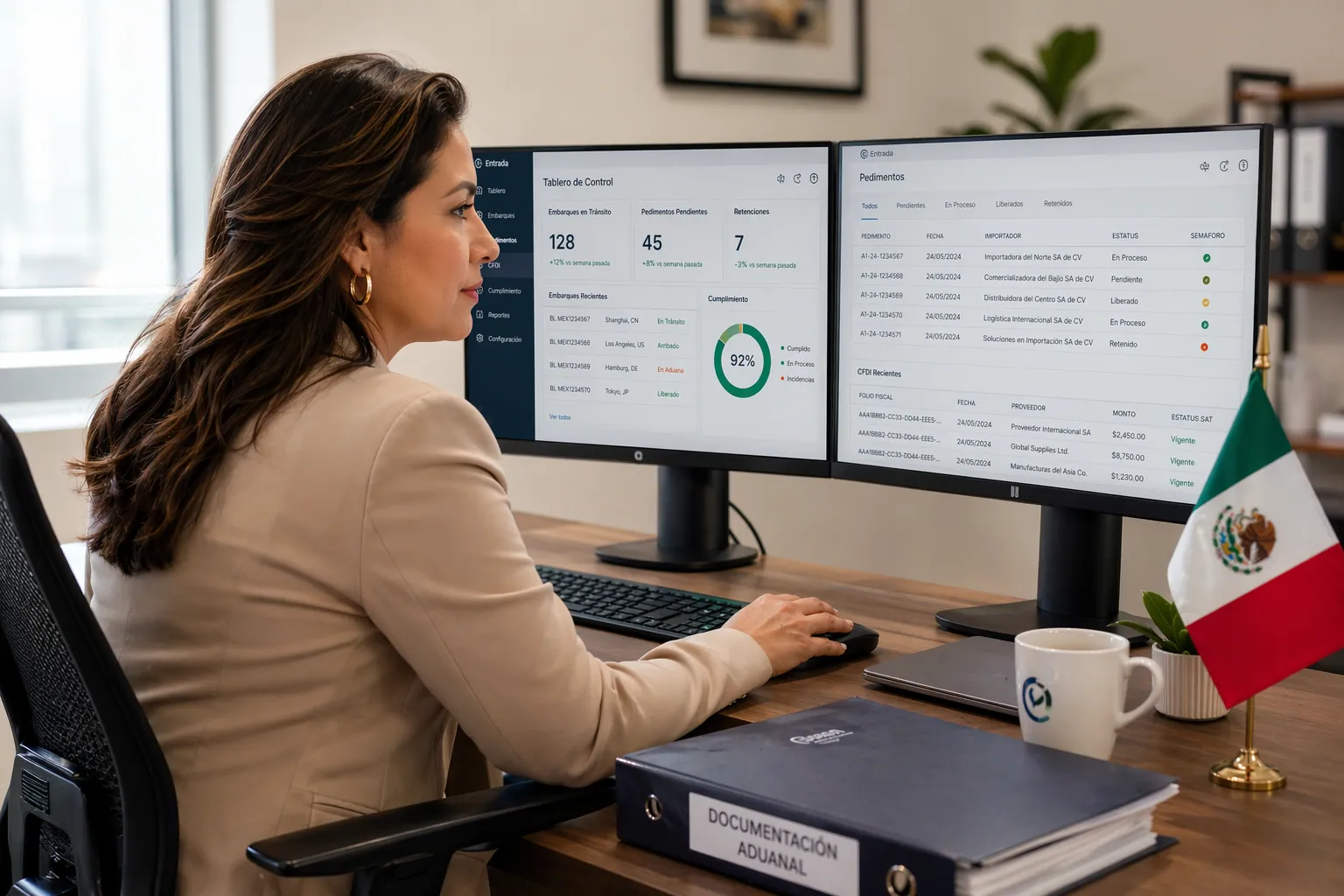
Run finance across 4 legal entities mixing individuals and companies — bank reconciliation from 3 days to 30 minutes
A multi-entity financial platform for a Mexican group with 4 legal entities and 6 branches sharing expenses, with traceability by branch, company and concept.
CFO or finance leadership of a Mexican business group that operates with a mix of individuals and companies as legal entities, multiple branches with shared expenses, and needs bank reconciliation, payroll and consolidated reporting in a single platform. If your bank reconciliation takes 3+ days, only your directors understand the Excel file, and commercial accounting software can't handle your individual/company mix — this case describes your situation.
The client
- Industry
- Internal financial services / multi-entity management accounting for Mexican business groups
- Client
- Mexican business group (mix of individuals and companies)
- Model
- Multi-company platform for groups that mix individuals and companies, with branches sharing expenses
- Scale
- 4 legal entities · 6 branches
The group's finances lived in the directors' Excel files, with no consolidated visibility or control across entities.
- Finance fragmented across 4 legal entities with personal and corporate tax structures mixed
- Bank reconciliation took 3 days every cycle, done in Excel only by company directors
- Each branch operating without effective communication with the others
- No real-time consolidated visibility for the group
- Shared expenses across 6 branches without any structured allocation
- Operations approved without traceability or formal authorization flow
- No commercial accounting software in the Mexican market supports controlled movements between branches mixing individuals and companies
A platform with 9 modules: security with OTP-based 2FA and RBAC, multi-company and multi-branch configuration with a geographic catalog, employee records with multi-branch assignment, accounts and movements with categorized concepts, financial operations with a Pending → Approved → Executed flow and cash breakdown, payees with tax data, invoicing segmented by entity, a dashboard with monthly income/expense trends, and a contextual user manual.
Controlled movements across branches and entities
Commercial accounting software is designed for one tax structure at a time: either all individuals or all companies. This platform explicitly models the mix, with shared-expense allocation by branch and cross-traceability by legal entity — a situation Mexican holdings face every day and no off-the-shelf product solves.
Bank reconciliation wizard
Imports bank statements from Excel and matches them against system movements.
Payroll processing wizard
Step by step, for multiple employee types per entity.
Automated expense distribution
Allocation to categories or cost centers across branches.
Formal authorization and audit
Authorization flow for critical operations (cancellations, special movements), document attachments and a complete audit log of every action.
Stack & architecture
Results
Mandatory, with a complete audit log and bulk Excel/PDF export in every module.
Financial control no longer sits only with the directors in Excel: a consolidated dashboard with monthly trends.
“Bank reconciliation across four legal entities used to take three days, and only the directors understood the Excel file. Today it takes thirty minutes, with full traceability of every expense shared between branches and entities.”
Lessons learned
- The “director's Excel file” is the symptom of a system that doesn't understand the group's tax reality. Designing the data model around the individual/company mix from day one is what kept us from rewriting the financial operations module at the first real client.
- Automated bank reconciliation via Excel import isn't a technical feature — it's a UX decision that saves the CFO 2.5 days a month. That's the metric the client defends in front of the board, not the wizard itself.
- Commercial accounting software is a real alternative, but it loses in the mixed multi-entity case. We validated the limitations of the commercial products before building the differentiator — we didn't assume “there was nothing out there.”
- The common internal blocker was operations staff who preferred opacity in handling shared expenses. A supervised authorization flow with a mandatory reason solved the pattern without confronting anyone.